
5 Innovative Ways to Utilize Dead Space Under the Stairs
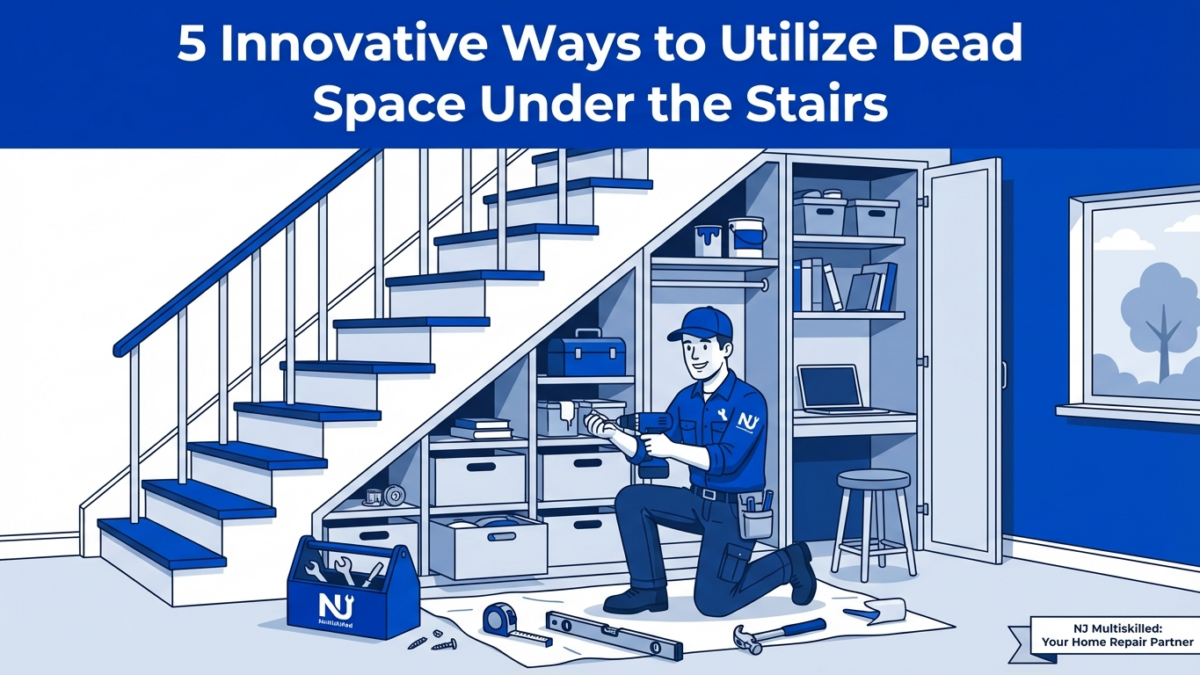
5 innovative ways utilize dead space under stairs featured 1
Walk into almost any two-story home, and there’s a hidden opportunity that most people completely ignore: the triangular void tucked beneath the staircase. In most homes, this space collects boxes, sports equipment, and dust—or it’s sealed behind drywall and forgotten entirely.
But with the right carpentry work, that dead space can become one of the most useful areas in your home. Whether you’re looking for storage, a workspace, or a design feature that adds character and value to your property, the space under your stairs has far more potential than you might think.
Here are five innovative ways to put that space to work.
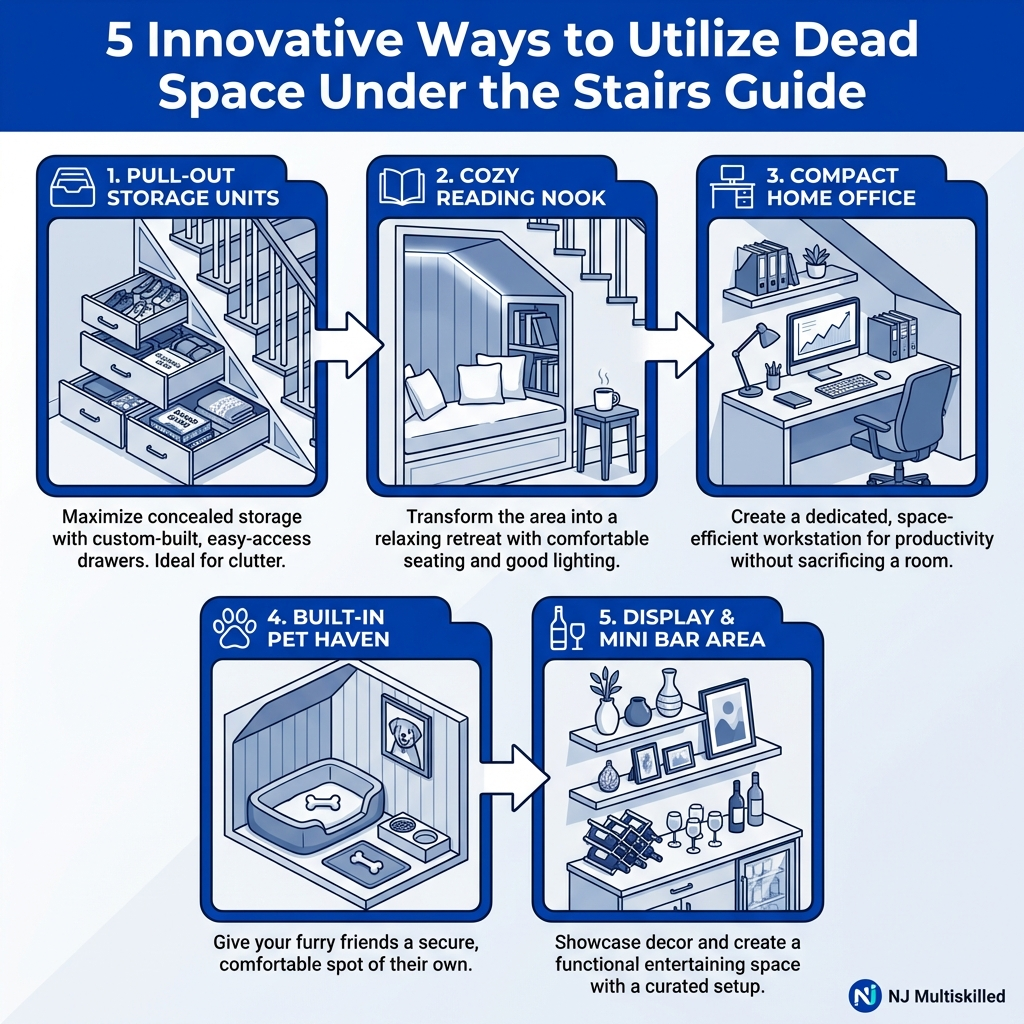
1. Built-In Storage Drawers and Cabinets
The most practical transformation for under-stair space is also the most popular for good reason: custom-built drawers and cabinets that follow the slope of the staircase. Each drawer or cabinet door is sized to fit the available height at that point in the staircase, creating a seamless built-in storage wall that looks intentional and high-end.
What it works best for:
- Shoes, bags, and outerwear near an entryway
- Board games, toys, and seasonal items in a living room
- Pantry overflow storage near a kitchen
- Linens and cleaning supplies in a central hallway
Design tips:
- Use full-extension soft-close drawer slides for deep pull-outs to maximize reach
- Choose cabinet face styles that match your existing millwork for a cohesive look
- Add interior LED strip lighting so you can actually see what’s inside
- Include a mix of drawer heights: small drawers near the low end, tall cabinets at the deepest point
The result is a built-in that looks like it was designed into the home from day one and adds measurable storage without sacrificing a square foot of floor plan.
2. A Built-In Reading Nook or Cozy Retreat
Transform the deeper end of your under-stair space into a private alcove—complete with built-in bench seating, cushions, and surrounding shelves. For homes with children, this becomes a beloved hideaway. For adults, it’s a quiet corner with built-in book storage that most design magazines would envy.
What makes it work:
- A padded bench (or upholstered window-seat style seating) built into the base
- Open shelving framing the space for books, plants, or decorative objects
- Warm lighting—recessed puck lights or a small pendant work well in low-ceiling niches
- A curtain rod or sliding barn door panel that can close the nook off for privacy
Who benefits most:
- Families with children who love imaginative play spaces
- Book lovers who want a designated reading corner
- Homeowners who want a design feature that becomes a conversation piece
The nook works particularly well when the stairs are adjacent to a living room or family room, where the space flows naturally.
3. A Compact Home Office or Study Nook
Post-pandemic, home offices became a priority for millions of homeowners, and under-stair space can serve as a surprisingly functional work area for those who don’t need a full dedicated room.
A custom under-stair office build typically includes:
- A built-in desktop at the appropriate working height (approximately 28″–30″)
- Floating shelves above for books, monitors, or storage
- Integrated cable management channels
- A small file cabinet or drawer unit below the desk surface
- Task lighting mounted to the underside of the stairs above
Make it work with smart design:
- Use a pocket door or curtain to close off the space when not in use, keeping the work/home divide visually clear
- Add a small whiteboard panel or corkboard on one wall
- Ensure at least one power outlet is run to the space (this requires an electrician; our electrical services in Oakhurst, NJ, can handle that as part of the project)
For parents working from home, students who need a dedicated study space, or anyone who wants a focused area without dedicating a full bedroom to it, this is an extremely high-value build.
4. A Mini Mudroom with Cubbies and Hooks
If your staircase is positioned near an entryway or side door, the under-stair space is a natural location for a built-in mudroom zone. A dedicated spot for coats, shoes, bags, and sports gear keeps the entry organized and prevents the dumping-everything-on-the-floor habit that plagues most homes.
A practical under-stair mudroom includes:
| Component | Function |
|---|---|
| Open cubbies | Assigned storage per family member |
| Coat hooks | Jackets, bags, helmets |
| Bench seating | Sit to remove shoes |
| Shoe storage below the bench | Boots, sneakers, sandals |
| Closed cabinet | Seasonal gear, cleaning supplies |
Material choices matter here: opt for moisture-resistant finishes, durable hardware, and easy-clean surfaces since this area will see daily heavy use. Painted MDF with solid wood face frames is a popular, cost-effective combination.
A well-built under-stair mudroom can also help improve your home’s resale appeal—buyers notice functional entryway organization, especially in family homes.
5. A Hidden Wine Cellar or Beverage Station
For the more design-forward homeowner, the under-stair space can become a dramatic built-in wine rack, beverage center, or mini bar. This transformation is particularly stunning when the stairs are visible from an open-concept living or dining area.
Design options range from simple to elaborate:
- Open wine rack system: Custom-built wooden wine cubbies sized for bottles, with a small serving ledge. Relatively low cost, high visual impact.
- Climate-controlled wine storage: Includes a small wine refrigeration unit integrated into the cabinetry. Best for serious collectors; requires electrical and ventilation planning.
- Beverage station / mini bar: Includes a small under-counter refrigerator, open shelving for glassware and spirits, a butcher block or stone countertop, and a small sink (if plumbing runs nearby).
Lighting is critical: LED strip lighting behind open shelving or puck lights aimed at wine bottles creates an ambiance that looks intentional and sophisticated.
This type of build adds genuine lifestyle value and is a standout feature when entertaining guests. Paired with the right finishes, it can look like a high-end custom home feature that costs far more than it actually did.
Planning Your Under-Stair Project: What to Know First
Before any work begins, a few practical considerations:
Structural check: The staircase framing must be assessed before cutting into it. Most standard stair framing can accommodate built-in storage without structural modification, but it should be confirmed.
Electrical and plumbing: Adding outlets, lighting, or a sink requires licensed trade work alongside the carpentry. NJ Multiskilled Handyman coordinates all trades in-house. Our electrical services and plumbing services can be bundled with the carpentry build.
Access door or panel: Even with a full built-in, leave a small access panel to any plumbing cleanouts or electrical junction boxes that may be located in the space.
Permits: In most NJ municipalities, interior carpentry work that doesn’t affect structural elements doesn’t require a permit. Adding plumbing or electrical does. Your contractor should confirm local requirements.
The Bottom Line
Dead space under your stairs isn’t wasted space—it’s waiting space. With the right carpentry and planning, a forgotten triangle of your home can become built-in storage, a cozy reading corner, a home office, a mudroom, or a wine cellar.
At NJ Multiskilled Handyman, our carpentry services in Oakhurst, NJ, include custom-built-ins, cabinetry, and woodwork designed to fit your exact space and lifestyle. We’ve been doing this for 25+ years, and we know how to turn unusual spaces into features homeowners are genuinely proud of.
Call (908) 332-0202 to discuss your under-stair project. Free estimates, 24/7 availability.
Need additional home improvement help? Explore our flooring services or visit our blog for more home improvement ideas in the Oakhurst and Monmouth County area.