
How to Build a Deck: DIY Steps vs. Hiring a Professional in Monmouth County
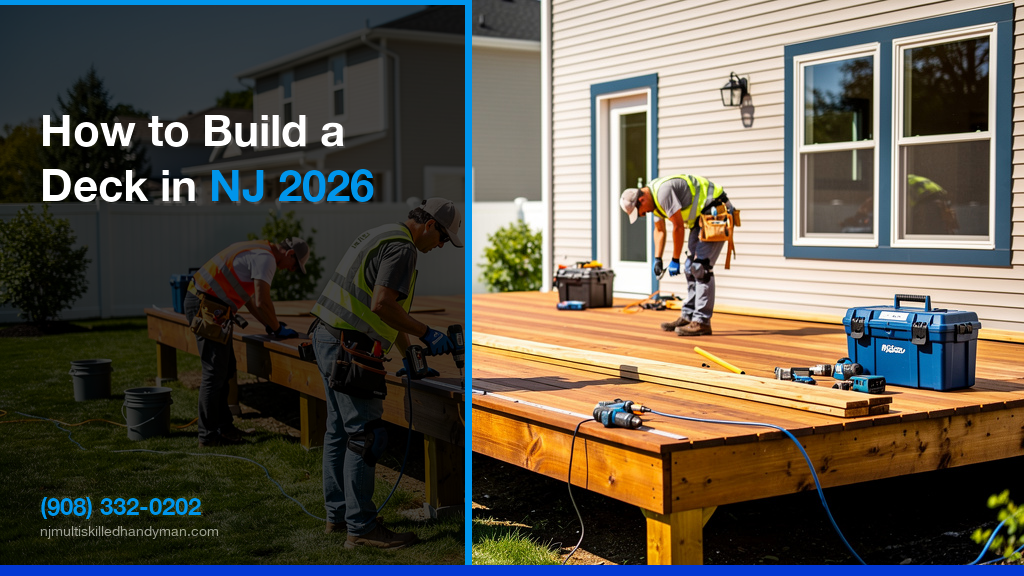
how to build deck nj 2026 feature
Key Takeaways
- A 200-square-foot pressure-treated deck costs $4,000–$7,000 to build yourself, or $8,000–$14,000 when you hire a professional in Monmouth County.
- New Jersey requires a building permit for any deck attached to your home. Inspections cover footings, framing, and final completion.
- DIY deck building takes 2–4 weekends for someone with solid carpentry skills; a pro crew finishes in 3–7 business days.
- The biggest mistakes we see in Oakhurst are undersized footings and wrong fasteners. Homeowners also ignore the 30-inch frost line required by NJ code.
- Hiring a licensed handyman or contractor protects you with insurance, warranty coverage, and code compliance that DIY lacks.
Building a deck in Monmouth County starts at around $8,000–$14,000 for a professional job on a 200-square-foot deck. You can cut that roughly in half if you build it yourself. But the real question isn’t just cost. It’s whether you have the time, tools, and know-how to build something safe that lasts 20 years.
What Monmouth County Homeowners Need to Know First
A deck isn’t a weekend Pinterest project. It’s a structural addition to your home. In Monmouth County, you need a permit. You need inspections. And you need to build to New Jersey’s Uniform Construction Code, which follows the International Residential Code with state-specific amendments.
NJ requires frost-protected footings dug to 30 inches deep per residential building code. That’s deeper than many southern states. Monmouth County’s coastal climate also means pressure-treated lumber must be rated for ground contact if it touches soil. We see too many DIY builds in Oakhurst use standard-grade lumber and watch it rot within five years.
The Permit Process in NJ
Before you break ground, visit your local building department. In Ocean Township (which covers Oakhurst), you’ll submit:
- Two copies of scaled drawings showing plan view, elevation, and footing details
- A site plan showing setbacks from property lines (typically 10 feet side, 20 feet rear)
- Material specifications, including lumber grade and fastener type
Permit fees run $200–$500, depending on deck size. Inspections happen at three stages: footing (before pour), framing (before decking goes down), and final. Skip any step, and you risk a stop-work order or failed resale inspection later.
How to Build a Deck Yourself: The Real Steps
If you’re genuinely handy and own a miter saw, circular saw, and drill. Post-hole digger, here’s what you’re signing up for.
Step 1: Design and Layout
Measure twice. Mark your post locations with stakes and string. Check for square by measuring diagonals — they should match within 1/4 inch. Call 811 before you dig. Hitting a gas or electric line in Oakhurst isn’t a lesson you want to learn the hard way.
Step 2: Dig Footings
Dig holes 30 inches deep and 12 inches across. Use cardboard tube forms for concrete piers. Drop in post anchors while the concrete is wet. Let it cure for a minimum of 48 hours before you load it.
Step 3: Frame the Structure
Set your posts on the anchors. Install the ledger board against the house using 1/2-inch lag bolts — never nails. The ledger is what carries half your deck’s weight. Run beams across the posts, then joists perpendicular to the beams. Space joists 16 inches on center for standard decking.
Step 4: Lay Decking and Railings
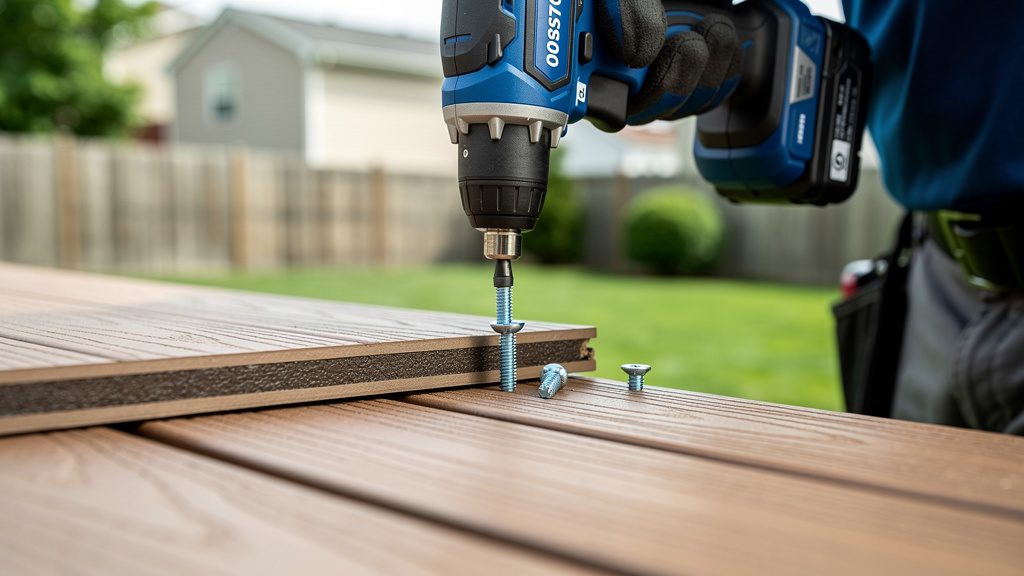
Leave 1/8-inch gaps between boards for drainage. Pre-drill near the ends to prevent splitting. Build railings to code: 36 inches high, with balusters spaced less than 4 inches apart. Add a graspable handrail on any stairway with four or more steps. Decks with lighting or outlets require electrical services permitted under the NJ code.
Step 5: Stain and Seal
Wait 2–3 months for pressure-treated wood to dry. Apply a penetrating oil-based stain with UV blockers. Re-stain every 2–3 years in Monmouth County’s sun and salt-air climate.
When DIY Deck Building Goes Wrong
We’ve repaired dozens of DIY decks in Monmouth County, including storm-damaged structures. The same problems show up again and again.
Wrong fasteners. Standard screws rust out in two years. You need hot-dipped galvanized or stainless steel hardware rated for pressure-treated lumber.
Ledger failures. Nails pull out. Lag bolts installed into weak sheathing instead of solid rim joists rip out under load. A falling ledger means your deck collapses.
Missing flashing. Water gets between the ledger and the house. It rots the rim joist. We’ve seen $10,000+ in structural repairs from this single mistake.
Handrail hazards. DIY railings often fail the 4-inch sphere test. If a 4-inch ball passes through, your balusters are too far apart. That fails code and puts kids at risk.
Hiring a Professional: What It Costs and What You Get
In Monmouth County, professional deck builders charge $40–$75 per square foot for pressure-treated wood. Composite decking pushes that to $60–$100 per square foot. For a 200-square-foot deck, you’re looking at:
| Material | DIY Cost | Pro Cost | Timeline |
|---|---|---|---|
| Pressure-treated pine | $4,000–$7,000 | $8,000–$14,000 | Pro: 3–7 days |
| Cedar | $6,000–$9,000 | $12,000–$18,000 | DIY: 2–4 weekends |
| Composite (Trex, TimberTech) | $8,000–$12,000 | $16,000–$24,000 | |
| PVC decking | $9,000–$14,000 | $18,000–$28,000 |
Labor makes up roughly half the total cost. But you also get:
- Permit handling. The contractor pulls permits and schedules inspections.
- Warranty coverage. Most pros warranty workmanship for 1–5 years.
- Insurance protection. If someone gets hurt on the job, their liability policy covers it.
- Code compliance. They know NJ’s amendments to the IRC, including the 30-inch frost depth and coastal wind-load requirements.
NJ requires contractors to be registered with the Division of Consumer Affairs. You can verify a contractor’s registration before you hire. Ask for certificates of insurance showing general liability and workers’ compensation.
So Should You DIY or Hire a Pro?
Build it yourself if you own the tools, have solid carpentry experience, and can commit two full weekends. You’ll save 40–50% on labor. But respect the complexity. A deck is structural. Mistakes hurt people and homes. Follow residential construction safety standards for any work at height.
Hire a pro if your deck is more than 12 inches off the ground or requires stairs. Attaches to a second story. The structural risk climbs fast with height. We’ve seen too many Oakhurst homeowners start a DIY deck in April. They call us in June to finish — or fix — what went wrong.
If you’re not sure where your skills fall, start smaller. Build a ground-level platform or pergola first. See how the permit process feels. Then decide if you want to tackle the full attached deck.
At NJ Multiskilled Handyman, we’ve built and repaired decks across Monmouth County since 2015. Want a straight answer on whether your project is DIY-friendly? Call (908) 332-0202 for a free estimate.
Frequently Asked Questions
1. Do I really need a permit for a small deck in Oakhurst?
Yes. New Jersey requires a permit for any deck attached to a dwelling, regardless of size. Detached decks under 200 square feet and 30 inches high may be exempt. But always check with Ocean Township building officials first. Building without a permit risks fines and mandatory removal.
2. How long does a pressure-treated deck last in Monmouth County?
15–20 years with proper maintenance. The salt air and humidity near the coast accelerate rot and hardware corrosion. Annual cleaning, bi-annual inspection of fasteners, and re-staining every 2–3 years extends lifespan significantly.
3. What’s the most expensive mistake DIY builders make?
Improper ledger attachment. Nailing the ledger to the house instead of bolting it into solid framing causes the most catastrophic failures. Water intrusion behind an unflashed ledger causes hidden rot that can cost $10,000+ to repair inside the home’s structure.
4. Can a handyman build a deck, or do I need a general contractor?
In New Jersey, deck construction falls under home improvement contractor work. A licensed handyman can legally build a deck if registered with the Division of Consumer Affairs. For multi-level or engineered designs, a contractor with structural experience is safer.