
How to Stain and Seal Your Deck This Summer: A DIY Guide for NJ Homeowners
deck staining sealing guide 2026 featured
Key Takeaways
- Professional deck staining in NJ typically runs $550 to $1,250, or $3 to $5 per square foot, depending on size and prep work.
- Most decks need restaining every two to three years, though solid stains can last five years or more.
- Stain only when it’s been dry for three days with two more dry days ahead, at 50 to 90 degrees.
- Ladder falls send more than 500,000 people to the emergency room every year, so gutter-height and multi-level deck work is where DIY often stops making sense.
- Wood decks in the Northeast can last 20 to 30 years with regular sealing, but skipped maintenance shortens that fast.
Staining and sealing a deck yourself costs a fraction of hiring it out, and mid-July, when the boards have had a few dry weeks to bake, is close to the best window all year to do it. Here’s how to do the job right, and where most NJ homeowners run into trouble.
Why Mid-Summer Is the Right Time to Stain
Wood needs to be bone dry before it takes stain evenly. After a stretch of hot, dry weather, the boards have shed the moisture they soaked up in spring, and that’s exactly what you want.
Stain penetrates best between 50 and 90 degrees, with low humidity and no rain forecast for at least 48 hours. Direct midday sun can dry the stain too fast and cause lap marks, so early morning or early evening application works better on a July afternoon.
A quick water test tells you if the wood is ready. Sprinkle a few drops on the surface. If they soak in within a minute or two, the deck will accept the stain. If the water beads up, the old finish hasn’t worn off yet, and you’re not ready to start.
What You’ll Need Before You Start
Gather everything before the first coat goes on. Running out of stain mid-board leaves visible lines you can’t blend out later.
- Deck cleaner or oxygen bleach solution
- Stiff-bristle scrub brush or a pressure washer set to low PSI
- Sandpaper (80 to 100 grit) for rough spots and old finish
- Exterior wood stain (semi-transparent or solid, depending on the look you want)
- Natural-bristle brush, roller, or pump sprayer
- Painter’s tape for railings and siding
- Safety glasses and gloves
Skip the pressure washer if you’re not confident using one. Too much PSI gouges soft wood and creates fuzzy grain that grabs stain unevenly, a common reason DIY stain jobs look patchy within a year.
Step-by-Step: Cleaning, Prepping, and Staining
Getting the order right matters more than the brand of stain you buy. Rushing the prep is the single biggest reason a stain job fails early.
1. Clear the deck completely. Move furniture, planters, and grills off the surface, and pull anything wedged between boards.
2. Clean the wood. Apply a deck cleaner and scrub with the grain. For decks with mildew or old stain buildup, oxygen bleach works without damaging the wood the way chlorine bleach can.
3. Let it dry. Give the deck at least 24 to 48 hours of dry weather after cleaning before you touch it again.
4. Sand problem areas. Splinters, raised grain, and old peeling finish need to come off. A random orbital sander speeds this up on large sections.
5. Apply stain in thin, even coats. Work in the direction of the grain, two or three boards at a time, and always maintain a wet edge so you don’t get overlap marks.
6. Let the first coat cure, then check if a second is needed. Semi-transparent stains often need just one coat. Solid stains usually look better with two.
7. Wait before walking on it. Most stains need 24 to 48 hours to cure enough for foot traffic, and up to two weeks before furniture goes back on.
Where DIY Deck Staining Goes Wrong
The mistakes that ruin a stain job are almost always about timing and prep, not the actual brushwork.
Skipping the cleaning step is the number one reason stain peels within a year. Dirt, mildew, and old finish sitting under new stain never bond right, no matter how good the product is.
Staining over wet wood is the second most common problem. If you rush the dry-out window, moisture trapped under the stain causes bubbling and blotchy color within weeks. Staining in direct afternoon sun causes the third: lap marks that show up once the stain fully cures, because the edges dried before you could blend them.
One more thing homeowners miss: railings, stairs, and the underside of the top rail age faster than the deck floor because they take more direct sun and rain. If you only stain the surface you walk on, you’ll be back out here touching up rails within a year.
When It Makes Sense to Call a Pro
A flat, single-level deck at ground height is a reasonable DIY weekend project for most homeowners. Multi-level decks, decks attached to a second story, or boards showing soft or rotted spots are a different situation.
Ladder and elevated work is where the risk math changes. Falls from ladders and elevated platforms send more than 500,000 people to the ER each year nationally, and about 300 people die from ladder falls annually. If your deck sits above a walkout basement or requires scaffolding to reach the rail caps, that’s worth weighing against the DIY savings.
Rotted boards are another line. Stain doesn’t fix structural damage, it just highlights it. If you press a screwdriver into a board and it sinks in soft, that section needs carpentry repair before any stain goes on, not after.
We handle both ends of this in Oakhurst and across Monmouth County: full deck builds through our carpentry services, and staining, sealing, and board repair through our general repair services. If you built or replaced a deck recently, our deck-building guide covers the framing side of the job in more detail.
Cost Comparison: DIY vs. Professional Deck Staining
| Item | DIY Cost | Professional Cost |
|---|---|---|
| Cleaner + scrub brush or washer rental | $30 to $80 | Included in quote |
| Stain (2-3 gallons for average deck) | $80 to $150 | Included in quote |
| Sandpaper, tape, brushes/roller | $30 to $50 | Included in quote |
| Labor | Your time (1-2 weekends) | Included |
| Total | $140 to $280 | $550 to $1,250 |
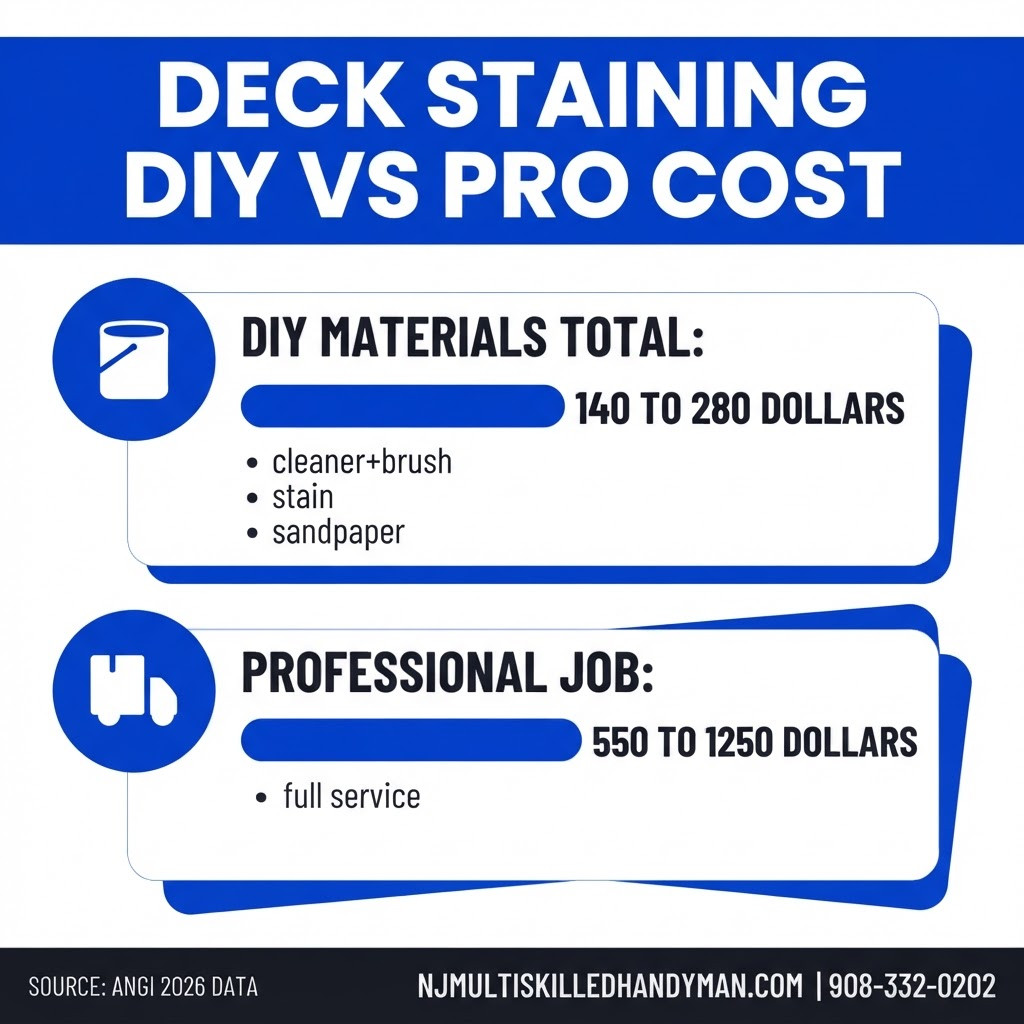
DIY saves money on materials, but it doesn’t cover the time cost of a full weekend, or the risk if the deck needs structural work you’re not equipped to spot. A pro job also comes with a level of surface prep, pressure-washing skill, and product knowledge that’s hard to match on a first attempt.
Protecting Your Deck After Staining
A fresh stain job is easiest to protect if you build a light maintenance habit around it. Sweep debris off regularly so leaves and dirt don’t trap moisture against the wood. Keep planters on pot feet instead of directly on the boards, since standing water under a pot wears through stain fast.
Watch for the water-bead test each spring. Once water stops beading and starts soaking in, that’s your sign it’s time to clean and reapply, usually somewhere in that two-to-three-year window. Homes near the Jersey Shore see faster wear from salt air and humidity, so decks in towns like Oakhurst and Deal often need attention closer to the two-year mark than the three.
If winter is coming up before you get to this, our home winterizing guide covers other exterior maintenance worth doing before the cold sets in, including fence and railing checks.
If you’d rather hand off the sanding and staining and just enjoy the deck, a quick call gets you a free estimate and a straight answer on what your deck actually needs. Reach our team at (908) 332-0202.

Frequently Asked Questions
1. How long does it take for the deck stain to fully dry before I can use it?
Most stains are dry enough to walk on in 24 to 48 hours, but you should wait about two weeks before putting furniture or grills back on the surface. Humidity and temperature both affect cure time, so hot, dry NJ summer days actually help speed things along.
2. Can I stain over an old deck that already has paint or stain on it?
You can, but only after removing as much of the old finish as possible with a cleaner, stripper, or sanding. Stain applied over peeling old finish will peel again within a season, regardless of the new product’s quality.
3. Is it cheaper to stain a deck myself or hire it out in NJ?
DIY materials run $140 to $280 for an average deck, compared to $550 to $1,250 professionally. DIY saves money if you have the time and the deck is a simple, single-level structure without rot or elevated access.
4. What’s the best type of stain for a deck near the Jersey Shore?
Semi-transparent or solid oil-based stains with UV protection hold up best against salt air and humidity common in Monmouth County shore towns. Homes closer to the water often need reapplication closer to every two years instead of every three.