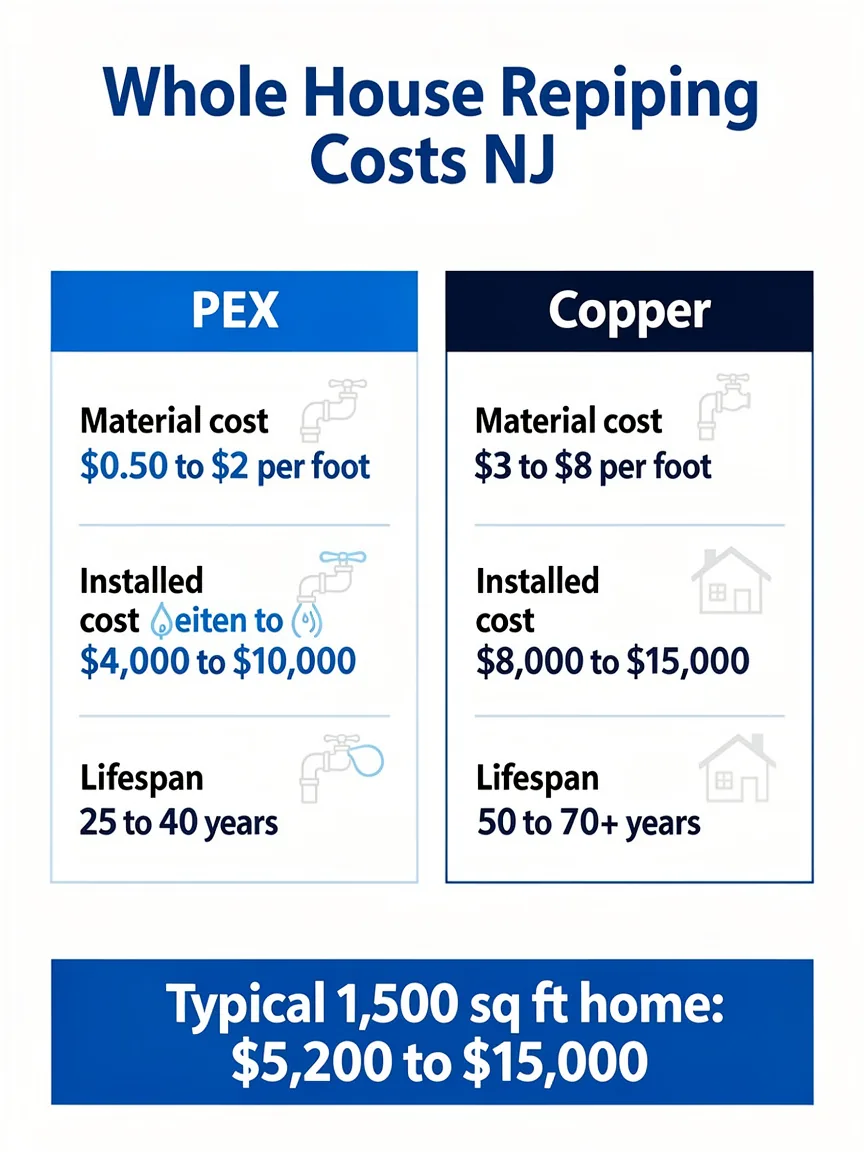
Repiping an entire house in New Jersey costs between $1,250 and $22,000 in 2026, with labor making up roughly 70% of the total bill. For a typical 1,500-square-foot Monmouth County home with PEX, expect to pay around $5,200–$6,700. Copper repiping of the same home runs significantly higher often $8,000–$15,000 but lasts decades longer.
If your Oakhurst home was built before 1980 and still runs on galvanized steel or polybutylene pipe, repiping isn’t a renovation choice — it’s a plumbing inevitability. Those materials fail. The only question is whether you plan the repipe on your timeline or on the pipe’s.
Key Takeaways
- Whole-house repiping costs $1,250–$22,000 depending on home size, pipe material, and accessibility.
- A typical 1,500 sq ft home repiped with PEX runs approximately $5,200–$6,700 in New Jersey.
- Copper repiping costs $8,000–$15,000 for the same home but lasts 50–70+ years vs. 25–40 years for PEX.
- Labor makes up roughly 70% of the total repiping bill — the pipe material itself is a smaller cost driver than the hours to install it.
- Signs you need repiping: brown/yellow water, consistently low water pressure, frequent pinhole leaks, visible corrosion on exposed pipes, and water discoloration after the water sits for a few hours.
PEX vs. Copper: The Material Decision
The pipe material you choose is the single biggest factor that determines both your upfront cost and when you’ll do this project again.
| Factor | PEX (Cross-Linked Polyethylene) | Copper (Type L) |
|---|---|---|
| Material cost per linear foot | $0.50–$2.00 | $3.00–$8.00 |
| Installed cost (whole house avg.) | $4,000–$10,000 | $8,000–$15,000 |
| Expected lifespan | 25–40 years | 50–70+ years |
| Freeze resistance | Excellent — expands without cracking | Poor — splits at joints when frozen |
| Corrosion resistance | Excellent — inert to water chemistry | Good — can corrode in acidic water |
| Installation complexity | Lower — flexible, fewer fittings | Higher — soldered joints, rigid runs |
| Resale perception | Accepted, increasingly standard | Premium — preferred by older buyers |
| Best for | Budget repipes homes with freeze risk | Long-term ownership, premium finishes |
For most Monmouth County homeowners, PEX is the practical choice. It handles New Jersey’s freeze-thaw cycles better than copper (the flexible tubing expands instead of splitting), costs roughly half as much installed, and is approved under the NJ Uniform Construction Code.
Copper makes sense if you plan to stay in the home for 20+ years, want the highest resale value, or your local water chemistry is aggressive enough to degrade PEX over decades (rare in Monmouth County, but worth asking your plumber about).
Repiping Cost by Home Size
| Home Size | Bathrooms | PEX Repiping Cost | Copper Repiping Cost |
|---|---|---|---|
| 1,000–1,200 sq ft | 1 | $4,000–$6,000 | $6,000–$10,000 |
| 1,500 sq ft | 1.5–2 | $5,200–$6,700 | $8,000–$12,000 |
| 2,000–2,500 sq ft | 2–2.5 | $6,000–$10,000 | $10,000–$15,000 |
| 3,000+ sq ft | 3+ | $10,000–$15,000 | $15,000–$22,000 |
These ranges assume a full repipe — all supply lines from the main shutoff to every fixture in the house. Partial repiping (just the hot water lines, or just the upstairs bathrooms) costs proportionally less.
What’s Included in a Whole-House Repipe
A professional repiping job includes far more than swapping out the pipe. Here’s the standard scope:
- Shut off the water main and drain the existing system
- Remove old piping — galvanized steel, polybutylene, or aging copper — including fittings inside walls where accessible
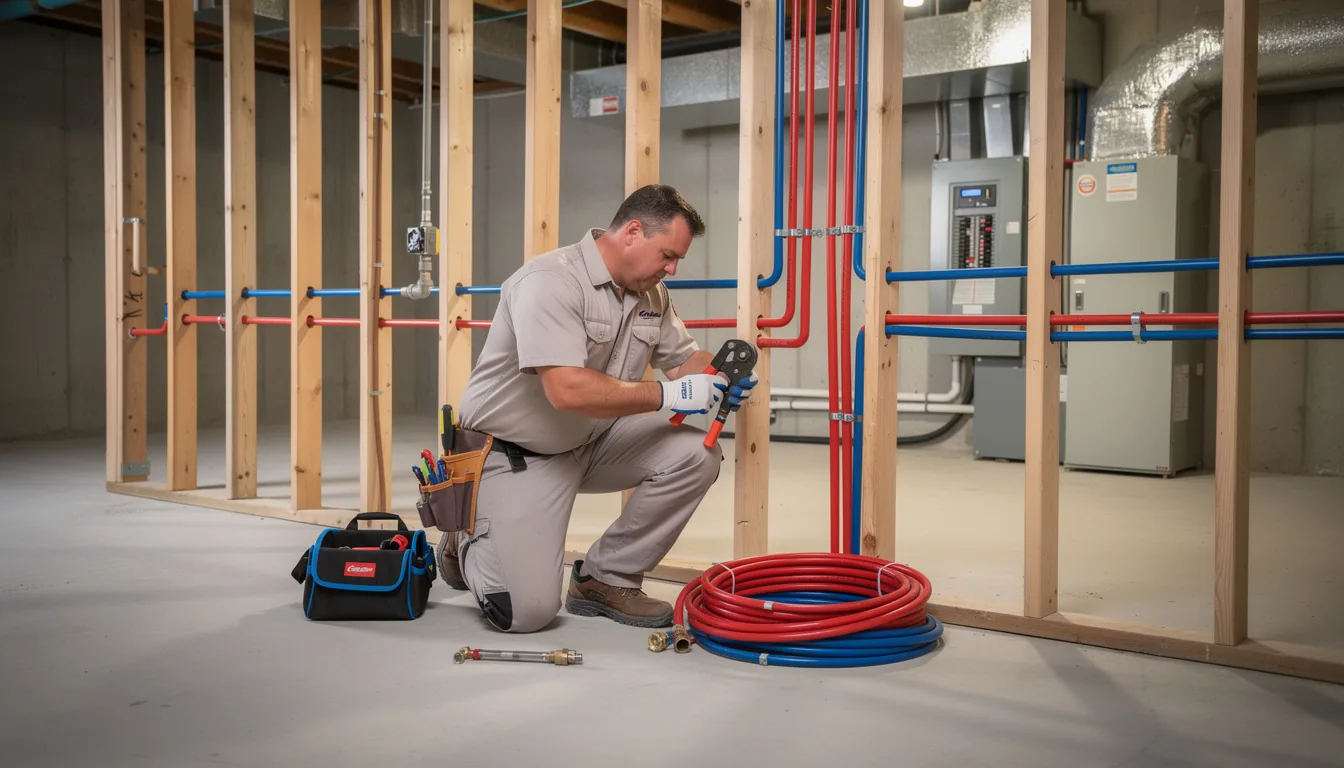
- Install new PEX or copper supply lines — home-run (manifold) or trunk-and-branch layout, depending on the system design
- Install new shutoff valves at every fixture (sinks, toilets, water heater, washing machine)
- Pressure test the entire system — verify no leaks at any joint before closing walls
- Patch drywall at access points — basic patching; full drywall repair and painting is typically a separate scope
- Final inspection — municipal plumbing inspection if a permit was pulled
What Drives Repiping Costs Up
Wall access. If your plumber can reach the existing pipes through a basement, crawl space, or unfinished attic, the job is far simpler — and cheaper. When pipes are enclosed in finished walls with no access points, the plumber must cut open drywall to reach and replace each run. Drywall cutting and patching add $500–$2,000, depending on how many walls are affected.
Number of fixtures. Every sink, toilet, shower, bathtub, washing machine, dishwasher, and outdoor hose bib adds a branch line, a shutoff valve, and labor time. A 3-bathroom home costs significantly more to repipe than a 1-bathroom ranch.
Permit fees. Most New Jersey municipalities require a plumbing permit for whole-house repiping. Permit fees typically run $100–$500, depending on the number of fixtures and the municipality’s fee schedule.
Water heater and appliance connections. If you’re replacing the water heater, washing machine supply lines, or dishwasher connection as part of the repipe, add $200–$600 for the additional labor and fittings.
Signs Your Monmouth County Home Needs Repiping
Not every plumbing issue means you need a full repipe. But if you’re seeing two or more of these symptoms, it’s time to get an assessment:
- Brown or yellow water — especially the first time you run the tap in the morning. This is rust from corroded galvanized steel pipes.
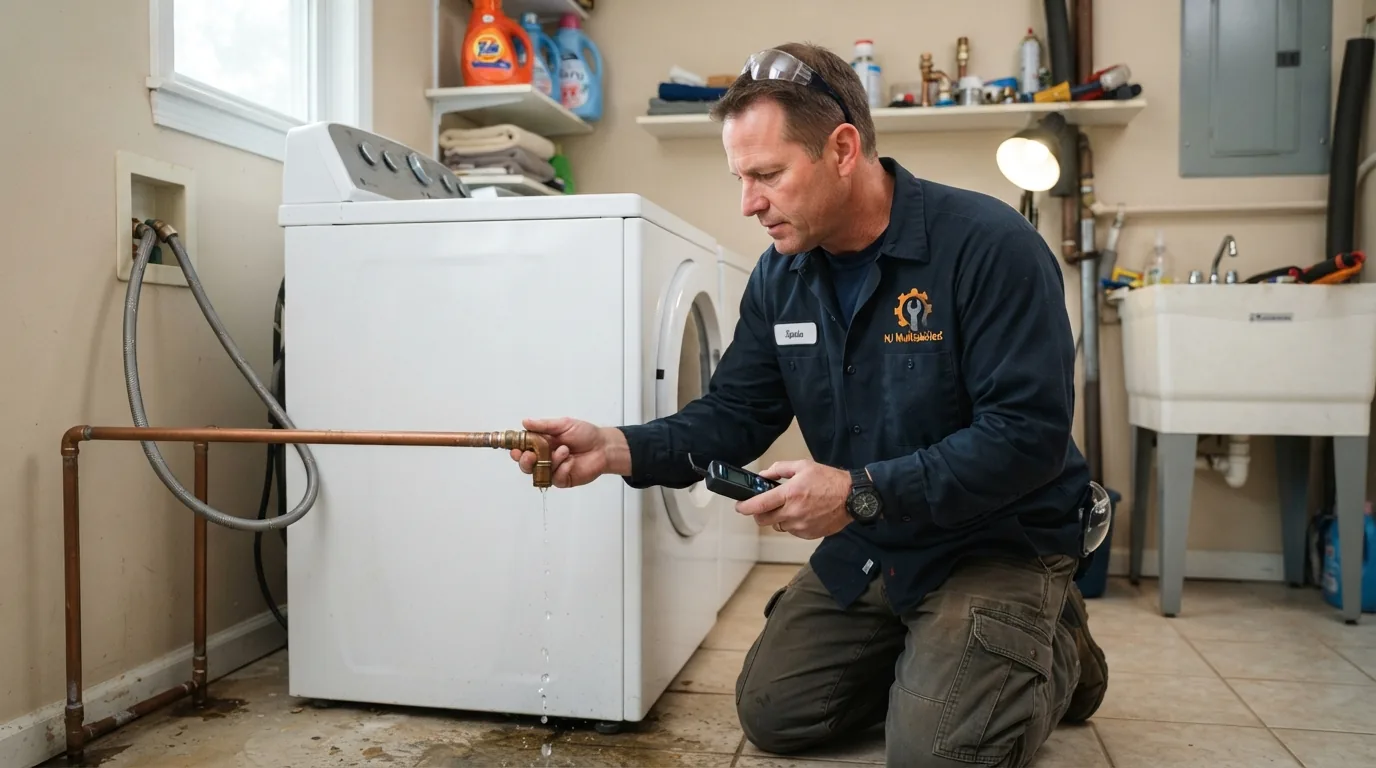
- Consistently low water pressure — mineral buildup inside old pipes reduces the inner diameter, restricting flow. If it’s happening at multiple fixtures simultaneously, the problem is in the pipes, not the fixtures.
- Frequent pinhole leaks — small leaks appearing in different sections of exposed pipe indicate systemic pipe failure.
- Visible corrosion on pipes — white/green crusty buildup on copper, rust bubbles on galvanized steel, or flaking on any exposed pipe.
- Water discoloration after sitting — fill a glass, set it for an hour, and come back. If there’s sediment or discoloration at the bottom, the pipes are shedding material into your water.
- Age of the home — galvanized steel pipes last 40–60 years. Polybutylene pipes (common in 1978–1995 construction) last 10–25 years. If your Oakhurst home falls in those construction windows, the pipes are at or past their design life.
How Long Does a Whole-House Repipe Take?
A professional repipe of a typical 1,500-square-foot Monmouth County home takes 2–5 days for PEX, or 3–7 days for copper. The timeline depends on:
- Number of bathrooms and fixtures
- Whether walls need to be opened for pipe access
- Whether the old piping is galvanized steel (harder to remove) or polybutylene (easier)
- Crew size — a 2–3 person plumbing crew completes the job significantly faster than a solo plumber
How NJ Multiskilled Handyman Can Help
Whole-house repiping is a licensed plumbing job — and that’s exactly what our team handles at NJ Multiskilled Handyman. Our certified plumbers perform plumbing services in Oakhurst, including full repipes, partial repipes, fixture replacements, and leak diagnostics. We handle permits, coordinate inspections, and ensure every installation meets NJ plumbing code.
Because we’re multi-skilled, we also handle the drywall patching and painting that follows a repipe — so you’re not coordinating three different contractors. Call us at (908) 332-0202 for a free estimate. We’re available 24/7.
Frequently Asked Questions
1. How much does it cost to repipe a house in New Jersey?
Whole-house repiping in NJ costs $1,250–$22,000, depending on home size and pipe material. A 1,500 sq ft home with PEX runs approximately $5,200–$6,700.
2. Is PEX better than copper for repiping?
PEX costs roughly half as much as copper installed, handles freeze-thaw cycles better, and is easier to install. Copper lasts longer (50–70+ years vs. 25–40) and has higher resale value. For most Monmouth County homes, PEX is the practical choice.
3. How long does a whole-house repipe take?
A PEX repipe of a typical 1,500 sq ft home takes 2–5 days. Copper takes 3–7 days. Homes requiring extensive wall access work take longer.
4. Do I need a permit to repipe my house in NJ?
Most New Jersey municipalities require a plumbing permit for whole-house repiping. A licensed plumber pulls the permit and schedules the required inspection.
5. What are the signs I need to repipe my house?
Brown or yellow water, consistently low pressure at multiple fixtures, frequent pinhole leaks, visible pipe corrosion, and water discoloration after sitting are the most common indicators. Homes with galvanized steel or polybutylene pipes past their design life should be proactively assessed.