
Window Buyer’s Guide NJ 2026: Vinyl vs. Fiberglass vs. Wood for Monmouth County Homes
window buyers guide nj 2026 feature
Key Takeaways
- Vinyl windows cost $350–$650 installed in Monmouth County and last 20–30 years with minimal maintenance.
- Fiberglass windows run $600–$1,000 installed, offer 38% better insulation than vinyl, and can be painted to match your home.
- Wood windows cost $800–$1,400 installed, provide unmatched beauty and insulation, but require regular staining or painting in coastal climates.
- Energy Star-certified windows can reduce heating and cooling costs by 12% on average. That saves roughly $200–$400 annually for a typical Monmouth County home.
- The best window for most Oakhurst homeowners is fiberglass or high-end vinyl with a low-E coating and argon gas fill.
Replacing windows in Monmouth County costs $5,000–$15,000 for a typical home with 10–15 windows. The material you choose affects not just price, but energy bills, maintenance, and how your home looks from the street.
Vinyl Windows: The Practical Choice
Vinyl windows dominate the replacement market for good reason. They’re affordable, durable, and maintenance-free. The PVC frames won’t rot, rust, or corrode important in Monmouth County’s humid, salt-air environment.
Vinyl Window Pros and Cons
| Factor | Vinyl Performance |
|---|---|
| Cost | $350–$650 per window installed |
| Energy efficiency | Good — especially with foam-filled frames |
| Maintenance | None — occasional cleaning only |
| Lifespan | 20–30 years |
| Color options | White, tan, bronze common; custom colors limited |
| Paintable? | No |
| Structural strength | Good; expands/contracts more than fiberglass |
Best for: Budget-conscious homeowners, rental properties, and anyone who wants to “set it and forget it.”
The downside? Vinyl can’t be painted if you change your home’s color scheme. It also has a wider frame profile than fiberglass or wood, which means slightly less glass area. And in extreme heat, dark-colored vinyl can soften or warp — though this is rare in NJ’s climate.
Look for virgin vinyl (not recycled) with multi-chambered frames. The chambers create air pockets that improve insulation. Fusion-welded corners are stronger than mechanically joined corners and won’t leak air or water.
Fiberglass Windows: The Balanced Upgrade
Fiberglass windows are made from glass fibers embedded in resin. They expand and contract at nearly the same rate as glass itself, which means seal failures are rare. That thermal stability translates to better long-term performance.
Fiberglass Window Pros and Cons
| Factor | Fiberglass Performance |
|---|---|
| Cost | $600–$1,000 per window installed |
| Energy efficiency | Excellent — 38% less conductive than vinyl |
| Maintenance | Minimal; can be painted if desired |
| Lifespan | 30–50 years |
| Color options | Paintable any color; factory finishes available |
| Paintable? | Yes |
| Structural strength | Excellent; thinner frames possible |
Best for: Homeowners planning to stay 15+ years, historic homes where paint color matters, and anyone prioritizing energy performance.
Fiberglass costs 50–75% more than vinyl upfront. But the energy savings add up. A typical Monmouth County home saves $200–$400 annually with Energy Star-certified windows. Over 20 years, that $4,000–$8,000 in savings narrows the price gap significantly.
Fiberglass also handles coastal conditions better than vinyl long-term. It doesn’t become brittle in cold or soften in heat. And because it can be painted, you’re not locked into one color for decades.
The main drawback? Fewer contractors install fiberglass compared to vinyl. Make sure your installer has specific experience with the brand you choose. Pella, Marvin, and Andersen all make quality fiberglass lines. But installation details vary.
Wood Windows: The Premium Option
Wood windows are the traditional choice for a reason. No synthetic material matches the warmth, grain, and carpentry-grade authenticity of real wood. In Monmouth County’s established neighborhoods, wood windows preserve architectural character that vinyl simply can’t replicate.
Wood Window Pros and Cons
| Factor | Wood Performance |
|---|---|
| Cost | $800–$1,400 per window installed |
| Energy efficiency | Excellent — natural insulator |
| Maintenance | High — staining/painting every 3–5 years |
| Lifespan | 20–30 years with proper maintenance |
| Color options | Unlimited — stain or paint any color |
| Paintable? | Yes |
| Structural strength | Good; susceptible to moisture if not sealed |
Best for: Historic homes, high-end new construction, and homeowners who value aesthetics above all else.
The maintenance burden is real in coastal NJ. Salt air, humidity, and temperature swings stress exterior wood finishes. We’ve seen poorly maintained wood windows in Oakhurst rot at the sill within 8–10 years. With proper care — scraping, sanding, and re-coating every 3–5 years — wood lasts 20–30 years.
Most modern wood windows are “clad” with aluminum or vinyl on the exterior. This gives you wood inside for beauty and low-maintenance cladding outside. Marvin’s Ultrex-clad wood and Andersen’s Fibrex composite cladding are popular options. Cladding adds $100–$200 per window but cuts maintenance significantly.
Side-by-Side Comparison for Monmouth County
| Feature | Vinyl | Fiberglass | Wood |
|---|---|---|---|
| Installed cost (typical) | $350–$650 | $600–$1,000 | $800–$1,400 |
| Energy efficiency | Good | Excellent | Excellent |
| Maintenance | None | Minimal | High (moderate if clad) |
| Lifespan | 20–30 years | 30–50 years | 20–30 years |
| Coastal durability | Good | Excellent | Fair (good if clad) |
| Paintable | No | Yes | Yes |
| Best for | Budget, rentals | Long-term value | Aesthetics, historic |
What Most Window Guides Miss: The Glass Matters More Than the Frame
Homeowners obsess over frame material and ignore the glass package. That’s a mistake. The glass determines 80% of a window’s energy performance.
Here’s what to look for:
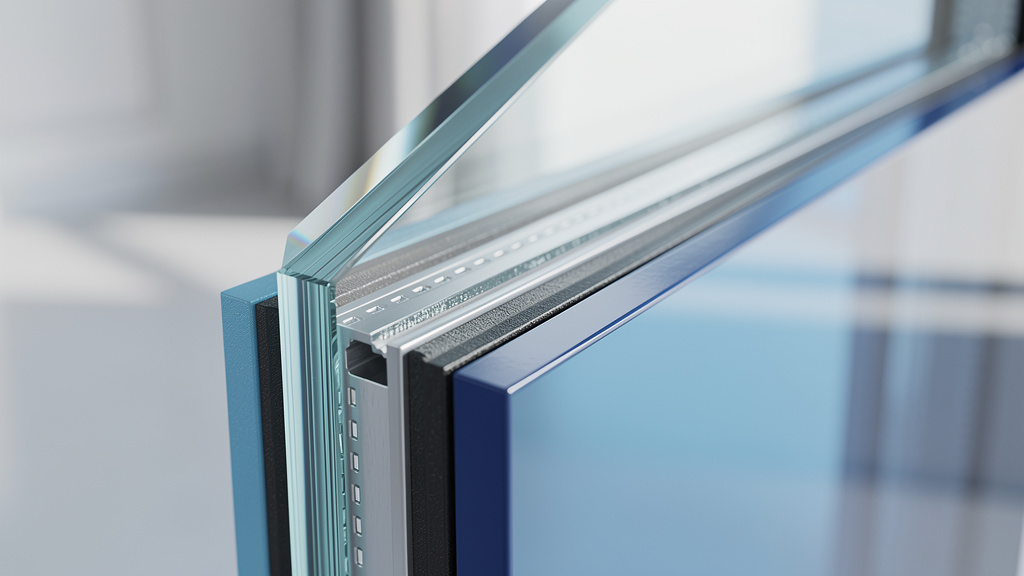
Double-pane minimum. Single-pane windows are obsolete. Double-pane with a low-E coating and argon gas fill is the standard for NJ’s climate.
Low-E coating. A microscopically thin metallic coating reflects heat back to its source. In winter, it reflects interior heat inside. In summer, it reflects solar heat out. Low-E coatings reduce energy loss by 30–50% compared to uncoated glass.
Argon or krypton gas fill. The space between panes is filled with dense, inert gas that slows heat transfer. Argon is standard and cost-effective. Krypton performs better in thinner gaps but costs more.
Warm-edge spacers. The spacer separates the two panes of glass. Traditional aluminum spacers conduct heat and create condensation at the edges. Warm-edge spacers made of foam or composite materials insulate better and reduce condensation.
U-factor and SHGC. Windows carry two key performance ratings on their certification labels:
- U-factor: Measures heat loss. Lower is better. For NJ, look for a U-factor under 0.30.
- Solar Heat Gain Coefficient (SHGC): Measures how much solar heat enters. For Monmouth County’s mixed climate, 0.25–0.30 is ideal.
Understanding Window Styles and Costs
The frame material isn’t your only choice. Window style affects price, ventilation, and appearance.
| Style | Cost Range | Best For |
|---|---|---|
| Double-hung | $350–$800 | Most rooms; classic look; easy cleaning |
| Casement | $450–$950 | Hard-to-reach areas; maximum ventilation |
| Sliding | $350–$700 | Wide openings; modern look |
| Bay/bow | $1,500–$4,000 | Living rooms; adding space and light |
| Picture/fixed | $300–$600 | Views; non-operable; most efficient |
| Awning | $450–$900 | Basements; rain-out ventilation |
Double-hung windows are the default choice for most Monmouth County homes. Both sashes move, which makes cleaning easier from inside — a big deal for second-story windows. Casement windows crank open and seal tighter than double-hung, making them 10–15% more efficient. But they cost more and the crank mechanism can wear out over time. Casement vs. double-hung pricing for your home size depends on the number of windows and opening dimensions.
The Real Cost of Window Replacement in NJ
For a typical 1,800-square-foot home with 12 windows, installation labor factors into the total alongside material cost:
| Scenario | Vinyl | Fiberglass | Wood |
|---|---|---|---|
| Standard replacement | $4,200–$7,800 | $7,200–$12,000 | $9,600–$16,800 |
| With full-frame install | $5,400–$9,600 | $8,400–$14,400 | $12,000–$20,400 |
| With exterior trim wrap | $6,000–$10,800 | $9,600–$16,200 | $13,200–$22,800 |
Pocket vs. full-frame installation: Pocket installation fits a new window into the existing frame. It’s faster and cheaper but only works if the existing frame is sound. Full-frame installation removes everything down to the rough opening, allowing proper insulation and addressing any hidden rot. In Monmouth County’s older homes, full-frame is often the smarter choice despite the extra cost.
Signs You Need New Windows
Not sure if replacement is worth it? Coastal storms can shatter glass and warp frames. Learn how long storm damage repair takes in Oakhurst. Look for these indicators:
- Drafts around closed windows
- Condensation or frost between glass panes (seal failure)
- Difficulty opening, closing, or locking
- Visible rot or water damage requiring repair on frames or sills
- Outside noise easily heard inside
- Fading of carpet or furniture near windows (failed low-E coating)
- Energy bills rising without rate increases
If your windows are 20+ years old and showing two or more of these symptoms, replacement usually pays for itself. You’ll gain comfort and energy savings.
Choosing the Right Window Installer
Even the best windows fail if installed poorly. In New Jersey, window installers must be registered home improvement contractors. Verify any contractor’s registration before signing a contract.
Ask potential installers:
- Are you certified by the window manufacturer? (Important for warranty coverage)
- Will you remove and dispose of old windows?
- Do you include exterior trim wrapping or painting?
- What does your workmanship warranty cover and for how long?
- Will you obtain permits if required?
A proper installation includes leveling the window in the opening and insulating gaps with low-expansion foam. Never use fiberglass batts. Properly flash the exterior to direct water out. Cutting corners here causes the same drafts and water damage you’re trying to fix.
At NJ Multiskilled Handyman, we’ve replaced windows across Monmouth County — from 1920s bungalows to modern builds. We know which glass packages perform best in coastal climates and how to install them so they last. More natural light also makes a home office more productive. If you’re comparing options, call (908) 332-0202 for a free estimate. We will give you honest guidance on what makes sense for your home.
Frequently Asked Questions
1. How much does window replacement cost in Monmouth County?
$350–$1,400 per window installed, depending on material and style. A typical home with 10–15 windows runs $5,000–$15,000 total. Vinyl is most affordable at $350–$650 per window. Wood is premium at $800–$1,400.
2. Are fiberglass windows worth the extra cost over vinyl?
For homeowners staying 15+ years, yes. Fiberglass is 38% more energy-efficient, lasts 30–50 years, and can be painted. The energy savings plus longevity narrow the upfront price gap significantly over time. See the full cost breakdown for window replacement in NJ.
3. How long do windows last in coastal NJ?
Vinyl and wood last 20–30 years. Fiberglass lasts 30–50 years. Salt air and humidity in Monmouth County accelerate wear on exterior finishes, especially wood. Clad wood and quality vinyl handle coastal conditions well with minimal maintenance.
4. Will new windows really lower my energy bills?
Yes. Energy Star-certified windows reduce heating and cooling costs by an average of 12%. For a typical Monmouth County home, that’s $200–$400 per year. In older homes with single-pane windows, savings can reach $500+ annually. That reduces strain on your HVAC system.