

Key Takeaways
- Condensation on the inside of windows means indoor air is too humid for how cold the glass is. It is a moisture problem first and a window problem second.
- The EPA says to keep indoor humidity between 30% and 50%, and lower when it is very cold outside.
- At 10°F outside, the EPA’s moisture guide lists 30% indoor humidity as the recommended maximum.
- Fog trapped between two panes is different. That is a failed seal, and wiping will not fix it.
- Bath fans, range hoods, and dryer vents that actually vent outside fix most cases.
Condensation on the inside of windows happens when warm, moist indoor air hits cold glass and cools below its dew point. On a cold Freehold morning, that shows up as fog, droplets, or even ice on the bottom of the pane. The fix is usually lowering indoor humidity, not replacing windows.
Where the condensation is tells you the cause
| Where you see it | What it means | What to do |
|---|---|---|
| Inside surface, room side | Indoor humidity too high for glass temperature | Lower humidity, improve ventilation |
| Between the two panes | Failed insulated glass seal | Replace the glass unit or window |
| Outside surface | Cool night, efficient glass | Normal; no fix needed |
| Bottom corners only | Coldest part of the glass, poor air flow | Open blinds, move furniture |
| Bathroom and kitchen only | Moisture from cooking and showers | Run fans longer |
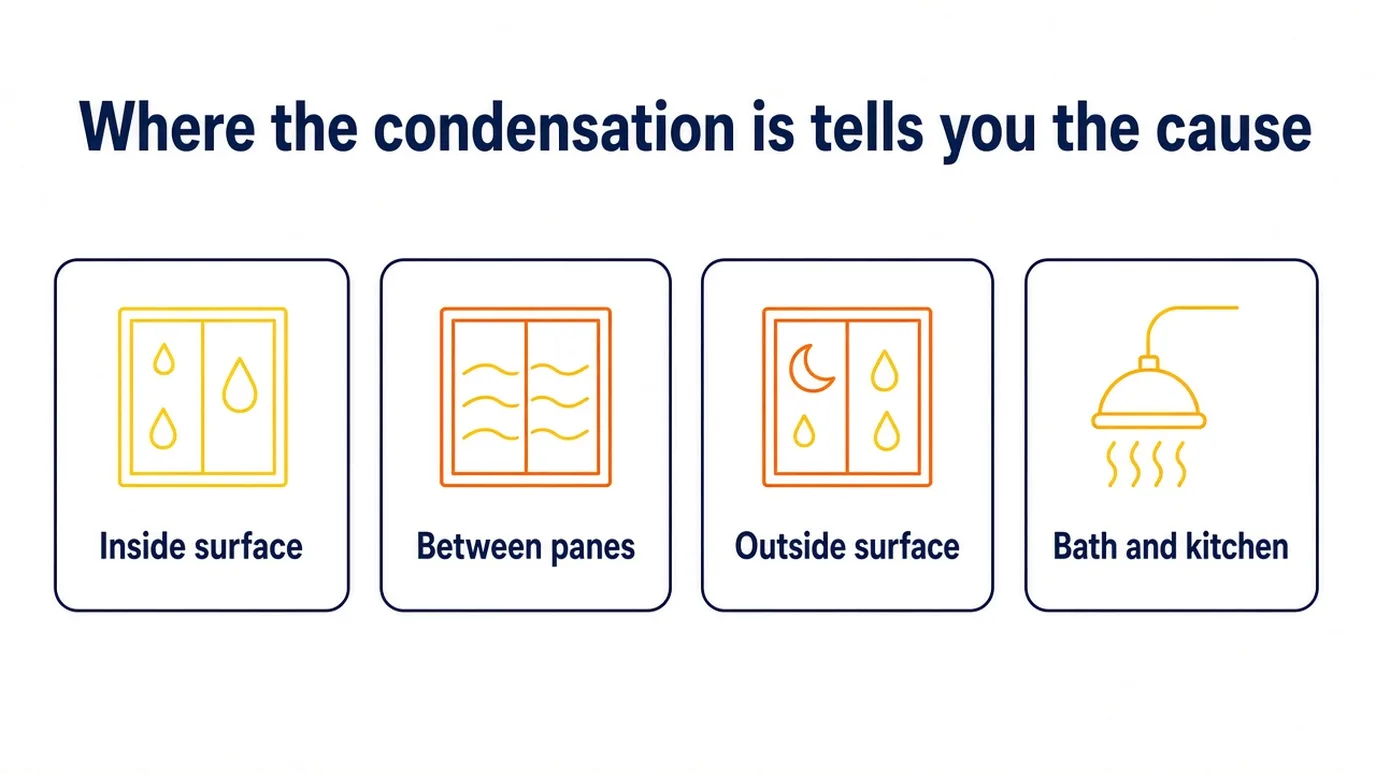
The bottom line: if you can wipe it off, it is a humidity problem. If you cannot reach it because it is between the panes, the seal has failed.
Why it gets worse in winter
The colder it is outside, the colder the inside surface of the glass gets. Air that holds moisture comfortably at 70°F drops water on glass that is much colder.
The EPA says excess moisture condenses on window glass because the glass is cold, and that a humidistat is set too high if moisture collects on windows. The same guide lists maximum indoor humidity by outdoor temperature:
| Outdoor temperature | Recommended max indoor humidity |
|---|---|
| +20°F | 35% |
| +10°F | 30% |
| 0°F | 25% |
Pro note: a cheap digital hygrometer tells you more than guessing. Put one in the bedroom with the worst windows and check it on the coldest mornings.
Common moisture sources
- Showers without a running bath fan
- Cooking without a range hood that vents outside
- Drying laundry indoors or a dryer vent that is disconnected
- A humidifier set too high
- Many houseplants or a fish tank in one room
- A damp basement or crawl space feeding moisture upstairs
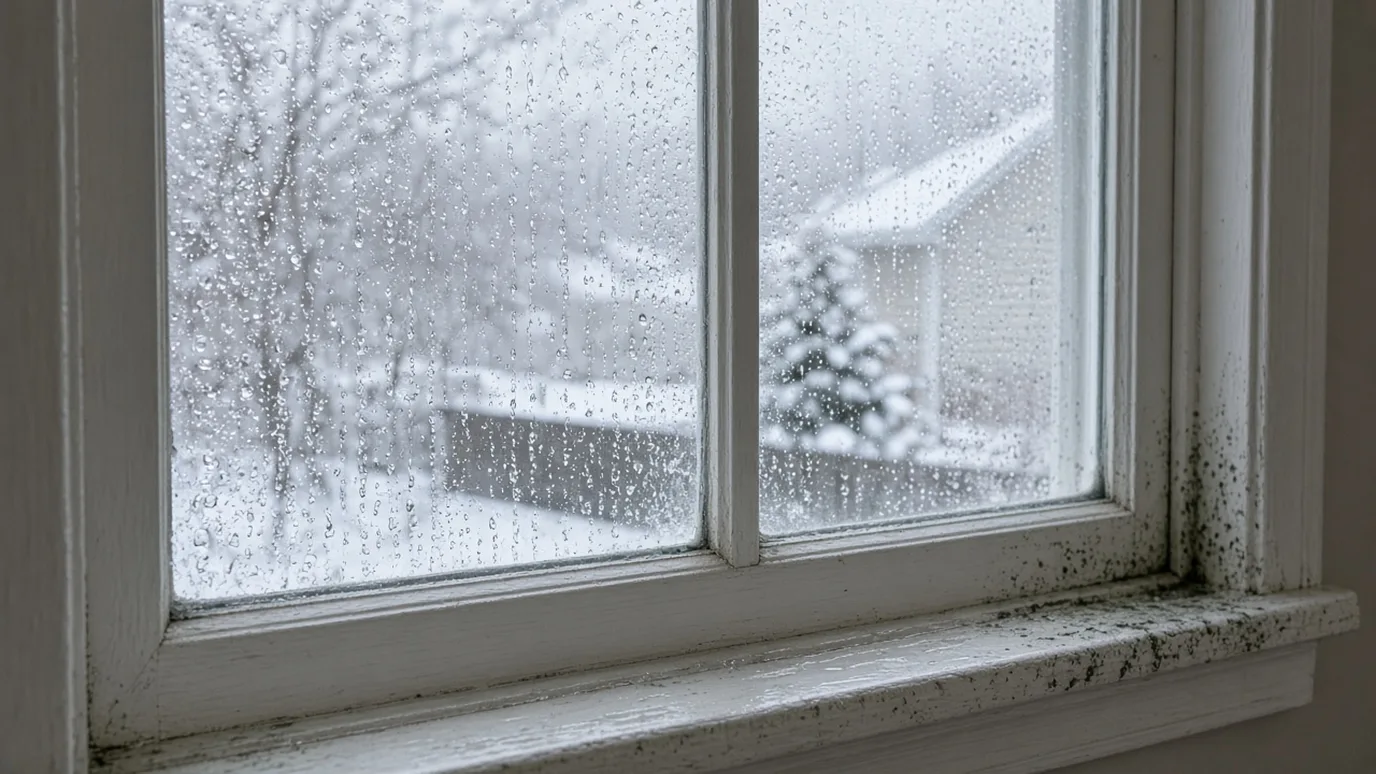
In Monmouth County homes, we often find tight, newer windows paired with original bath fans that are undersized or vent into the attic. That combination traps moisture inside the house. The EPA notes mold is often found in cold corners behind furniture where condensation forms, so check behind dressers on outside walls too.
Fixes that work
- Lower the humidifier setting to match the outdoor temperature, using the EPA table above.
- Run bath fans during and for a while after showers. Make sure they vent outside, not into the attic.
- Use the range hood when cooking, especially boiling water.
- Open blinds and curtains so warm room air reaches the glass.
- Check the dryer vent for leaks and a proper outside termination.
- Dry out the basement with a dehumidifier if it smells damp.
The EPA also notes that storm windows and caulking around windows keep the interior glass warmer and reduce condensation. Our tips on winterizing your home cover sealing around windows.
The bottom line: wipe the sills dry each morning while you fix the cause. Water that sits on wood sills and drywall returns leads to peeling paint, rot, and mold.
When it means the window is the problem
Condensation between the panes, a sash that will not close tight, or rotted sills point to the window itself. A failed seal will not recover, and the glass unit or window needs replacing.
If you are weighing new windows, our window buyers guide for NJ explains frame types and what to ask for. Soft or stained drywall under a window usually needs repair once the moisture is fixed.
Mold is a sign the problem has gone on too long. The EPA advises keeping indoor humidity between 30% and 50% to help prevent mold growth.
Get help with the fix
We repair water-damaged sills and drywall, re-caulk windows, and fix or replace bath fan venting across Freehold, Manalapan, Marlboro, and Howell. See our drywall repair services or call (908) 332-0202. For trim and sill rot, our carpentry team can rebuild it so it lasts. If the windows themselves are failing, our window buyers guide compares replacement options.
Frequently Asked Questions
Can you fix a window with condensation inside the glass?
If the fog is between the two panes, the insulated glass seal has failed. Replacing the glass unit or the whole window is the only real fix. If it is on the room side, lowering indoor humidity solves it.
Does condensation mean my house is too cold?
Not exactly. It means the air is too humid for how cold the glass is. Raising the room temperature can help a little, but lowering humidity and improving air flow to the glass helps more.
What is the best way to stop condensation on windows?
Lower indoor humidity. Run bath fans and range hoods, set humidifiers to match the outdoor temperature, and open blinds so warm air reaches the glass. The EPA lists 30% indoor humidity as the maximum at 10°F outside.
Is condensation on the inside of windows bad?
A little on very cold mornings is common. Daily condensation that runs onto the sills can rot wood, peel paint, and grow mold, so fix the moisture source.
Should new windows have condensation on the inside?
New, tight windows can show it at first because they stop drafts that used to dry the air. The fix is better ventilation, not a different window.