
Key Takeaways
- Most loose railings come from wall brackets that missed the studs, screws that stripped out, or a newel post that was never fully anchored.
- Wood shrinks in dry winter air. That is why many railings feel looser in January.
- Fixr puts stair handrail repair at about $100–$500, and spindle repair at $150–$500.
- The model residential code calls for a handrail on stairs with four or more risers, mounted 34 to 38 inches above the stair nosing.
- A wobbly newel post is a structural repair, not a tightening job.
A loose stair railing usually happens because its fasteners lost their grip in the wood behind them. A wall-mounted handrail is often a quick fix. A wobbly newel post or rail that moves where it joins the post usually needs a stronger anchor. Here is how to tell which you have, what you can do, and when it is time to call.
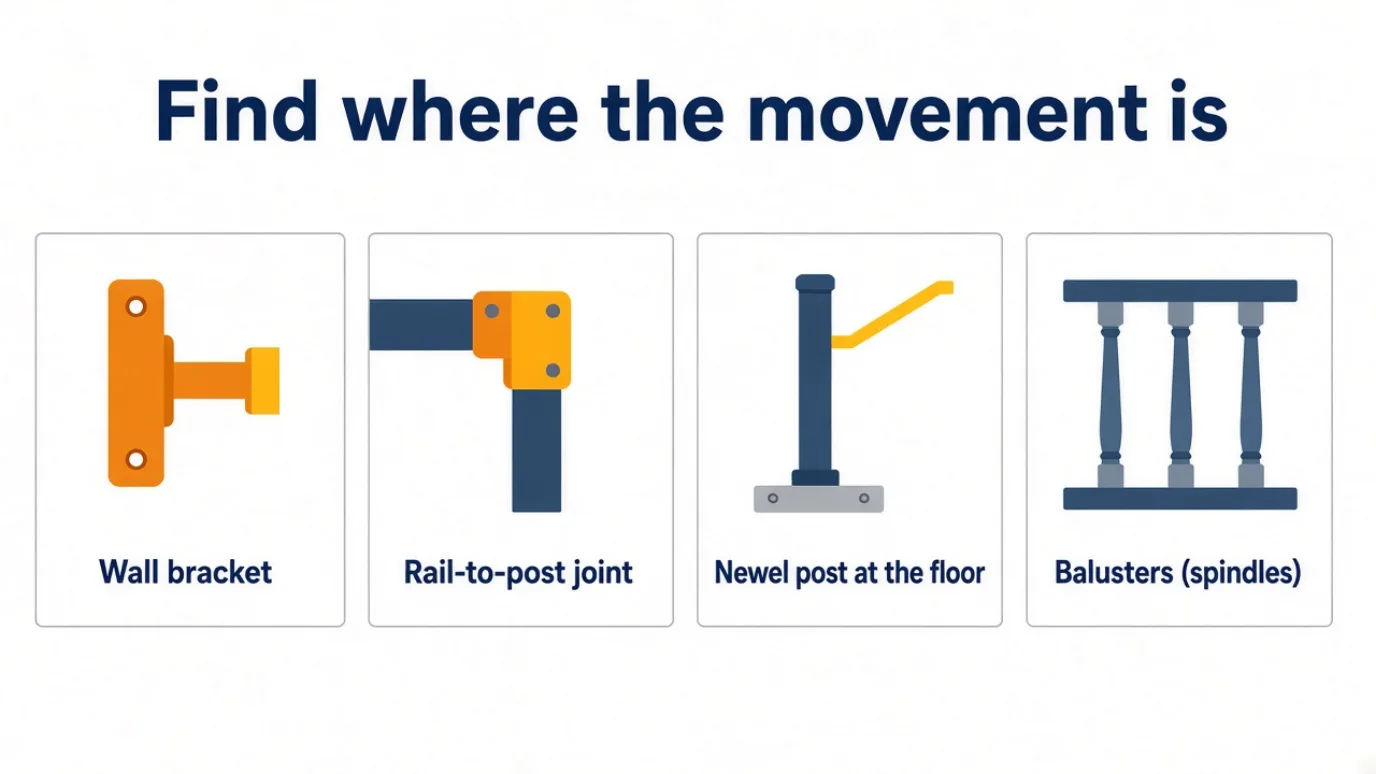
Find where the movement is
Hold the rail and push it gently side to side. Watch where it moves.
| Where it moves | Likely cause | Fix difficulty |
|---|---|---|
| Wall bracket | Screws in drywall only, or stripped | Easy: re-anchor into studs |
| Rail-to-post joint | Loose rail bolt or failed glue | Moderate: tighten or re-bolt |
| Newel post at the floor | Post not anchored to framing | Harder: add a structural anchor |
| Balusters (spindles) | Glue or nails failed | Moderate: re-glue and pin |
| Whole run sways | Several weak points at once | Pro: assess the whole system |
The bottom line: Do not ignore a railing that moves at the newel post. That post takes the most force when someone grabs the rail at the bottom step.
Why railings get loose
Fasteners in drywall. Brackets need to be screwed into studs. If the installer missed, the screws hold only in gypsum. Every grab loosens them.
Seasonal wood movement. Wood shrinks as indoor air dries out in winter heating season. Joints that were tight in summer can open up.
Stripped screw holes. Tightening the same screw over and over strips the wood. The screw spins without grabbing.
Newel post anchoring. Many newel posts sit on the subfloor with a lag screw or two. Years of people swinging around the bottom step loosen them.
Glue failure. Balusters are often glued and pinned. Old glue dries out and spindles start to rattle.
Settlement. In older homes, framing moves. A rail that once lined up perfectly can pull away from its posts.
What you can fix yourself
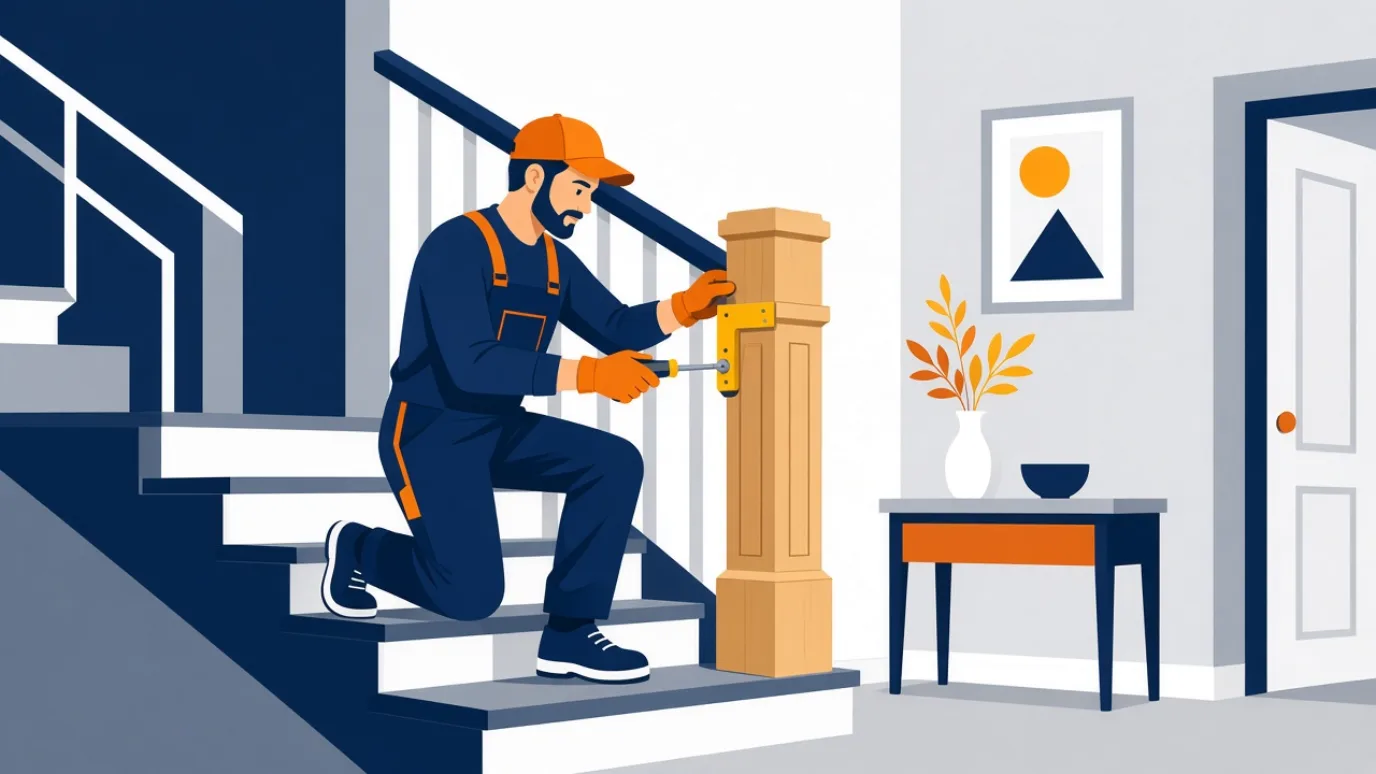
Wall brackets. Use a stud finder. If a bracket sits between studs, move it to a stud or use a mounting block screwed into two studs. Use screws long enough to go well into the framing. Plastic anchors are not strong enough for a handrail.
Stripped holes. Fill the hole with glued wooden dowels or toothpicks, let it dry, then re-drive the screw. Or move the bracket slightly to fresh wood.
Loose baluster. Add wood glue at the top and bottom joint and pin it with a finish nail.
Pro note: If you tighten something and it feels solid, give it a firm tug. A real handrail must hold a person’s weight when they slip. “Feels fine” is not enough.
When it is a job for a pro
Call a carpenter when:
- The newel post moves at the floor.
- The rail joint to the post keeps opening up.
- Several balusters are loose or missing.
- Wood is cracked, split, or rotted.
- The rail is lower than about 34 inches or missing on a staircase that needs one.
- You see gaps big enough for a small child to slip through.
Newel post repairs often mean opening up the floor or the skirt board to add a proper structural anchor. That is precise work.
What repairs cost
Fixr lists stair handrail repairs at $100–$500 and spindle repairs at $150–$500. Its overall stair repair average is about $500. A full rail replacement costs more, especially with custom wood.
| Job | Fixr national range |
|---|---|
| Handrail repair | $100–$500 |
| Spindle repair | $150–$500 |
| Overall stair repair | $100–$1,000 |
Code basics for handrails
The International Residential Code, which New Jersey uses as the base for its one- and two-family rules, says:
- Stairs with four or more risers need at least one handrail.
- Handrail height should be 34 to 38 inches above the stair nosing.
- The rail should be continuous for the full flight.
When replacing a railing, ask if a permit is needed. The state code covers which repairs count as ordinary maintenance.
Basement and outdoor stairs
Basement stairs are often built quickly and left with a single 2x4 rail. Upgrade them if someone in your home relies on the rail.
Deck and porch stairs face rain and freeze-thaw cycles. Rot at the post base is common. Our deck repair services cover outdoor rails. For bigger deck work, see our NJ deck building guide.
Get it fixed right
We repair and replace handrails, newel posts, and balusters in Freehold, Manalapan, and nearby towns. We anchor into framing so the fix lasts. See our carpentry services, or call (908) 332-0202 for a quote. If you are prepping for guests, our holiday hosting checklist covers other quick fixes. Have extra space under the stairs? See our ideas for using dead space under the stairs.
Frequently Asked Questions
How do you fix a wobbly stair railing?
Find where it moves. Wall brackets need screws into studs. A loose rail joint may need re-bolting. A moving newel post usually needs a structural anchor.
Why is my banister loose?
Usually the fasteners lost their grip. Seasonal wood shrinkage, stripped screw holes, and anchors set in drywall are the most common causes.
How much does it cost to fix a loose handrail?
Fixr reports handrail repairs at about $100–$500.
What height should a stair handrail be?
The IRC sets it at 34 to 38 inches above the stair nosing.
Can I tighten a newel post myself?
Sometimes a lag bolt can be tightened from below. If the post still moves, it needs a stronger anchor, which is best done by a carpenter.