
Key Takeaways
- Fixr’s 2026 national range for professional Christmas light installation is $250–$650, with an average near $450.
- Per-foot pricing commonly runs $2–$5 per linear foot for materials and labor.
- ENERGY STAR certified decorative light strings use about 92% less energy than conventional incandescent strings.
- Outdoor-rated lights, GFCI-protected outlets, and clips (not staples or nails) are the three rules that prevent most problems.
- Book early. Freehold and Manalapan installers fill November calendars fast, and takedown is a separate visit to plan.
Professional Christmas light installation in Freehold and Manalapan usually costs a few hundred dollars for a typical roofline, more for two-story colonials, trees, and custom-cut strands. The real value is not the lights themselves. It is skipping the ladder work on a cold, windy roof edge.
What you’re paying for
Christmas light installation is the measuring, hanging, powering, and later removing of holiday lighting on a home’s roofline, windows, shrubs, and trees.
| Pricing piece | National figure (Fixr 2026) |
|---|---|
| Typical project | $250–$650 |
| National average | about $450 |
| Per linear foot (materials + labor) | $2–$5 |
| Labor share per foot | $1.50–$3.50 |
| High-end example | up to $1,500 |
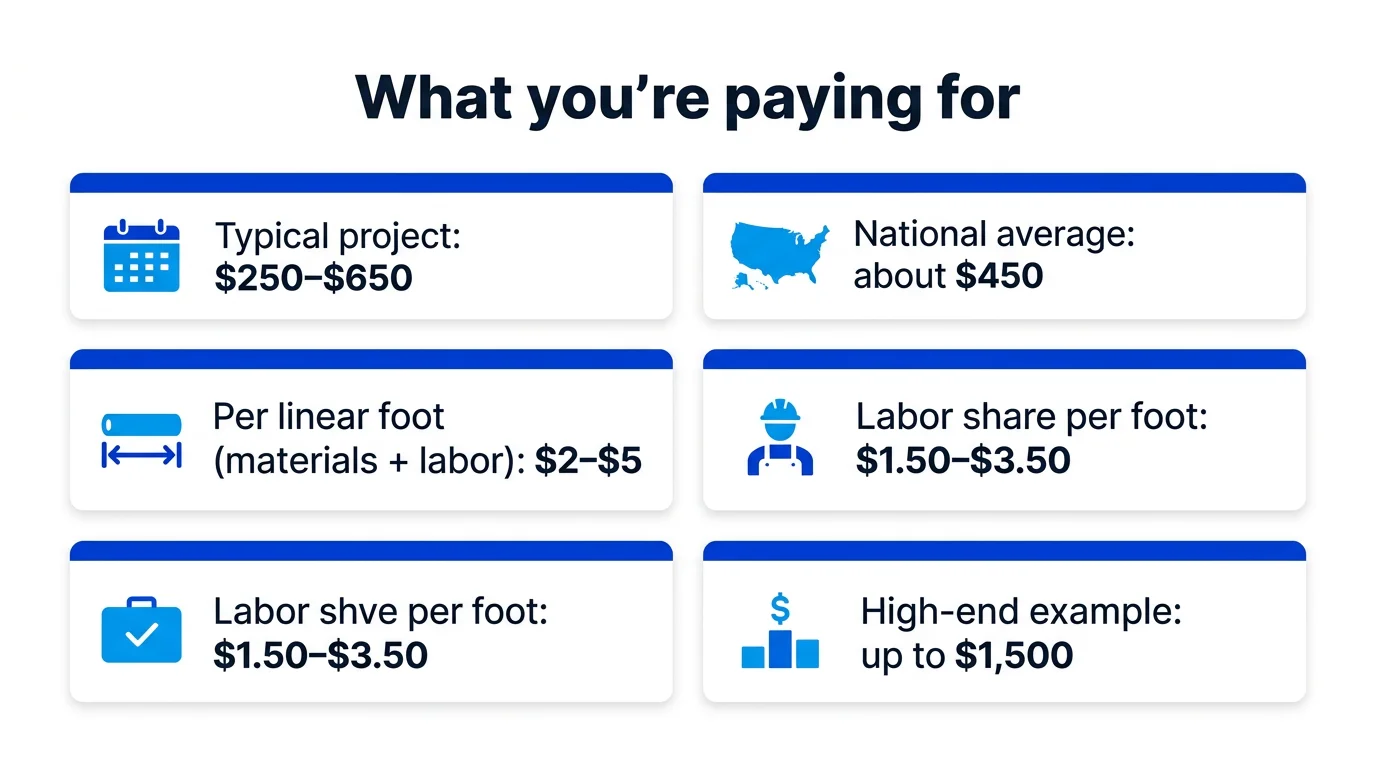
The bottom line: A ranch home with 120 feet of roofline is a very different job from a two-story Manalapan colonial with peaks, a wrapped porch, and two front trees. Measure your roofline and list every feature before you compare quotes.
Freehold vs Manalapan homes: what changes the quote
Freehold has older homes near the borough center with steep roofs and mature trees. Manalapan has more two-story colonials from the 1980s and 1990s with long rooflines and larger lots.
Roof height and pitch. Two stories and steep pitches need taller ladders, tie-offs, and more time.
Gutters vs drip edge. Gutter clips are fast. Shingle tabs and drip edges need different clips.
Trees and shrubs. Wrapping trunks and branches is slow, hand work. Net lights on shrubs are quicker.
Power access. If the only outdoor outlet is on the back patio, cords and timers add cost and trip hazards.
Rental vs owned lights. Some installers include commercial-grade lights. Others hang your strands. Ask which.
Safety rules that matter most
Holiday decorating injuries are common. NFPA’s winter holiday safety page covers decorations, lights, and candles that drive fires during the season.
Follow these rules whether you DIY or hire:
- Use only lights marked for outdoor use.
- Plug outdoor lights into GFCI-protected outlets.
- Use plastic clips on gutters and shingles. Don’t nail or staple through wires.
- Check every strand for cracked sockets or bare wire before hanging.
- Don’t overload a single outlet or extension cord.
- Use a timer so lights aren’t on all night.
Ladder falls are the biggest DIY risk. Wet leaves in gutters, frost on rungs, and wind gusts make a December roof edge dangerous. That alone is why many homeowners hire this job out.
LED vs incandescent: an honest comparison
| Factor | LED | Incandescent |
|---|---|---|
| Energy use | ENERGY STAR LED strings use about 92% less | Higher |
| Heat | Cool to the touch | Warm bulbs |
| Up-front cost | Higher | Lower |
| Lifespan | Longer; ENERGY STAR requires a 3-year warranty | Shorter |
| Color | Crisp; warm-white options exist | Classic warm glow |
Pro note: LED is the better choice for most rooflines. It runs cooler near gutters and dry leaves, uses less power on long runs, and lasts more seasons.
Protect gutters, shingles, and trim
Clip-on installs should not damage your home. Watch for:
- Clips that lift shingle tabs and let water in
- Strands pulled tight across gutter seams
- Cords pinched in windows or doors
- Staples in fascia and trim
Clean gutters before hanging lights. Clogged gutters hold water and ice, which adds weight and makes clips fail. Our gutter cleaning guide covers what to check first.
Outlets and GFCI checks
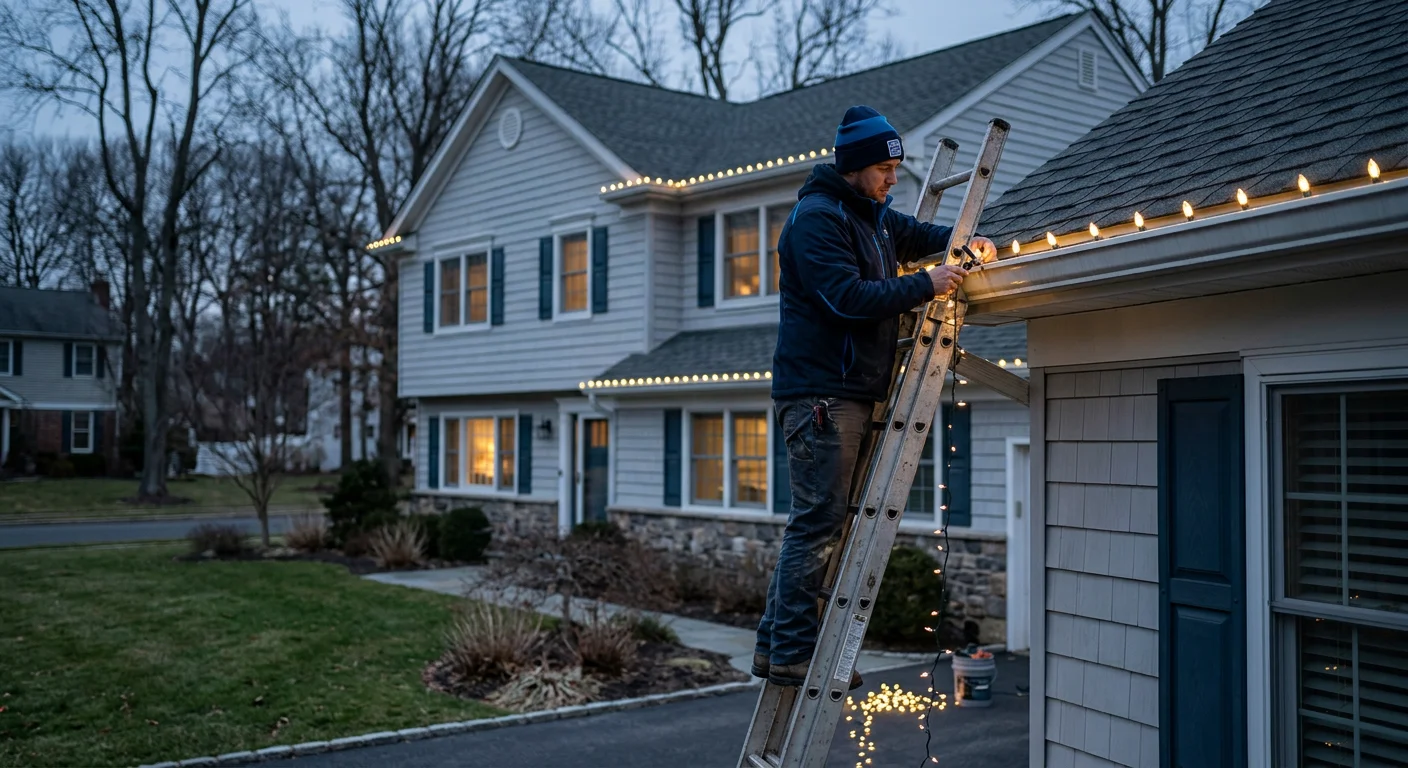
Most problems at the plug come down to one outdoor outlet doing too much work.
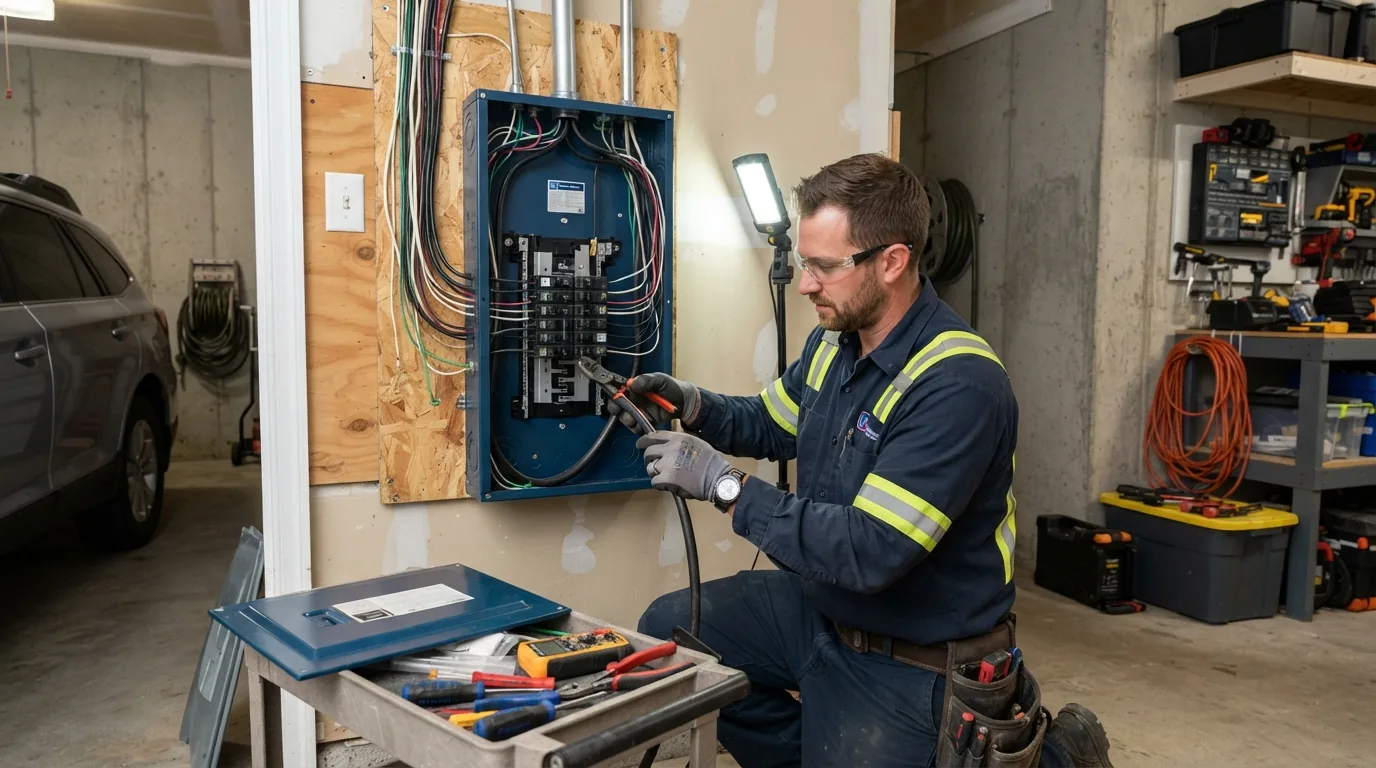
Check that every exterior outlet you plan to use is GFCI-protected and has a working in-use cover. If the outlet trips constantly when it rains, that is a fault to fix, not a nuisance to bypass.
If you need a new exterior outlet, that is electrical work. New Jersey’s UCC requires permits for electrical work on existing buildings, apart from ordinary maintenance. Plan it in October, not the week of Thanksgiving.
DIY or hire? A worked example
Here is a realistic comparison for a two-story Manalapan colonial with about 150 feet of front roofline, two porch columns, and four foundation shrubs.
DIY path. You buy LED strands, clips, a timer, and an outdoor extension cord. You need a ladder tall enough for the second-story gutter and a helper to foot it. Plan most of a Saturday, plus takedown in January.
Hired path. At Fixr’s $2–$5 per linear foot, 150 feet of roofline alone works out to roughly $300–$750 before shrubs and columns. Takedown may be extra.
Handyman hourly path. If you already own the lights, some homeowners book a handyman by the hour to hang them. Fixr’s national handyman rate runs $50–$100 per hour. That can be the cheapest pro option for a simple ranch roofline.
Our verdict: DIY makes sense on a single-story home with easy gutter access. Two-story rooflines, steep pitches, and icy weather tip the math toward hiring.
Yard lighting without tripping hazards
Freehold and Manalapan lots often have long front walks and lawn displays. Cords running across a walkway are a trip risk for guests and delivery drivers.
Route cords along edges, use outdoor-rated stakes, and keep connections off wet ground. If a fence line carries lights, check posts and rails first. A leaning post with a strand pulled tight will fail in the first wind. See our fence repair cost guide if posts need work before the season.
Plan the takedown now
Takedown takes nearly as long as installation. Ask installers if removal and storage are included or billed separately.
Store lights coiled on reels or cardboard, labeled by location. Toss damaged strands rather than repairing them.
Pair holiday prep with winter repairs
December is also when drafts, frozen hose bibs, and loose gutters show up. If someone is already on a ladder at your roofline, it makes sense to check gutter hangers and downspouts the same day.
Fall winterizing is the other half of holiday prep. Our winterizing guide covers hose bibs, weatherstripping, and door sweeps. For interior touch-ups before guests arrive, see painting and carpentry services.
If you want lights up safely without the ladder work, call (908) 332-0202 with your roofline length, number of stories, and any trees or shrubs you want lit. We can usually give a free written quote from photos.
Frequently Asked Questions
Can you pay someone to put up Christmas lights?
Yes. Many handymen and lighting companies install and remove holiday lights. Fixr’s national range for installation is $250–$650, averaging about $450.
How much does it cost to install 200 feet of Christmas lights?
At Fixr’s $2–$5 per linear foot, 200 feet works out to roughly $400–$1,000 for materials and labor, before extras like trees, timers, or takedown.
Are LED Christmas lights worth it?
Usually, yes. ENERGY STAR certified LED strings use about 92% less energy than incandescent strings and stay cooler on gutters and dry leaves.
When should I book Christmas light installation in Monmouth County?
October to early November. Installer schedules fill fast after Halloween, and weather windows shrink in December.